
Hailuo vs Kling 2.6 : Vitesse ou Réalisme - Quel Modèle Vidéo IA Gagne Vraiment ?
Bien que les deux modèles visent à générer des vidéos de haute qualité, les différences de comportement de sortie ne sont pas toujours évidentes à partir de la documentation seule. Une comparaison directe utilisant les mêmes prompts fournit une vue plus claire de la performance de chaque modèle dans des conditions réelles.
Dans ce guide, Hailuo AI et Kling 2.6 sont testés sur plusieurs scénarios utilisant des prompts identiques. L'évaluation se concentre sur le respect des prompts, le réalisme du mouvement, la cohérence temporelle et les artefacts visuels.
À la fin, vous aurez une compréhension plus claire de la performance des deux modèles et lequel est le mieux adapté à votre cas d'utilisation spécifique.
Qu'est-ce que Hailuo AI ?
Hailuo AI est un modèle vidéo génératif qui supporte plusieurs flux de création, incluant la génération texte-vers-vidéo et image-vers-vidéo. Il est conçu pour produire des clips vidéo courts à partir d'entrées structurées, permettant aux utilisateurs de définir des éléments comme le sujet, l'environnement, le mouvement et le comportement de la caméra dans un prompt.
Au-delà de la génération basique, Hailuo AI fournit un niveau de contrôle sur la façon dont les scènes sont construites, rendant possible la production de sorties plus cohérentes sur différentes exécutions. Ceci est particulièrement utile lors du test de variations de prompts ou de la génération de lots de contenu similaire.
Qu'est-ce que Kling 2.6 ?
Kling 2.6 est un modèle vidéo génératif qui supporte plusieurs flux de travail, incluant la génération texte-vers-vidéo et image-vers-vidéo. Il est conçu pour générer des clips vidéo courts à partir d'entrées structurées, où les utilisateurs définissent des éléments comme le sujet, l'environnement, le mouvement et le comportement de la caméra dans un prompt.
Similaire à Hailuo AI, Kling 2.6 repose sur des entrées basées sur les prompts pour produire des sorties vidéo. Cela permet aux utilisateurs d'expérimenter différentes structures de prompts et configurations de scènes lors de la génération de contenu avec Kling video 2.6 AI.
Similitudes et Différences des Modèles
Bien que ciblant des flux de travail similaires, Hailuo AI et Kling 2.6 partagent une base commune mais divergent dans l'exécution. Les deux génèrent des vidéos à partir de prompts structurés, supportent le texte/image-vers-vidéo et offrent l'intégration API. Les différences clés résident dans la façon dont chaque modèle gère le réalisme, le mouvement et le comportement de génération.
Qualité Vidéo
Les deux génèrent des sorties hautement détaillées. Kling 2.6 excelle dans le réalisme cinématographique, l'éclairage dramatique et la synchronisation audio native. Hailuo AI se concentre sur le réalisme basé sur la physique, délivrant des interactions très crédibles (comme l'eau ou le tissu), bien que son aspect général puisse être légèrement moins poli.
Performance du Mouvement
Les deux supportent le mouvement complexe et le contrôle de caméra. Kling 2.6 priorise les dynamiques de caméra style réalisateur, offrant des panoramiques larges et des plans de suivi. Hailuo AI excelle dans le mouvement du sujet, rendant des mouvements humains rapides et anatomiquement corrects et des actions physiques sans cassure.
Respect des Prompts
Les deux suivent bien les entrées structurées. Hailuo AI interprète fidèlement les instructions physiques mais peut animer des mouvements de lèvres inutiles. Kling 2.6 offre un contrôle plus fort sur le rythme de la scène, le ton émotionnel et propose un prompting négatif très efficace.
Stabilité de Génération
Les deux visent des sorties cohérentes. Hailuo AI affiche une cohérence temporelle exceptionnelle, souffrant rarement de morphing de personnage ou de déformation de membres pendant l'action intense. Kling 2.6 maintient une forte cohérence environnementale, bien que les clips longs puissent occasionnellement introduire des erreurs de physique mineures.
Vitesse et Efficacité
Les deux supportent les flux de travail API pour la génération répétée. Hailuo AI est généralement plus rapide, le rendant idéal pour le prototypage rapide et les délais courts. Kling 2.6 nécessite souvent des temps de rendu plus longs en raison de son éclairage complexe et de son traitement audio intégré.
Tarification
La tarification pour les deux modèles est la suivante :
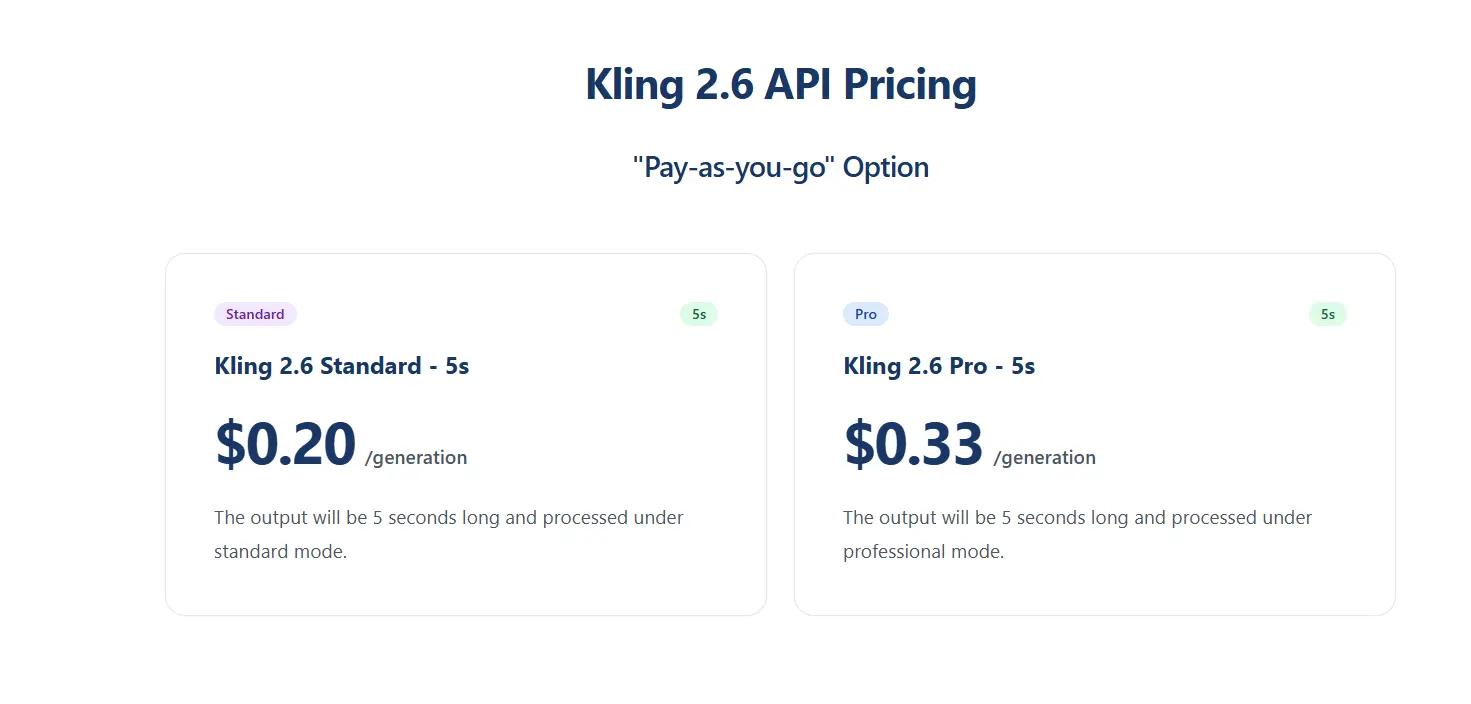
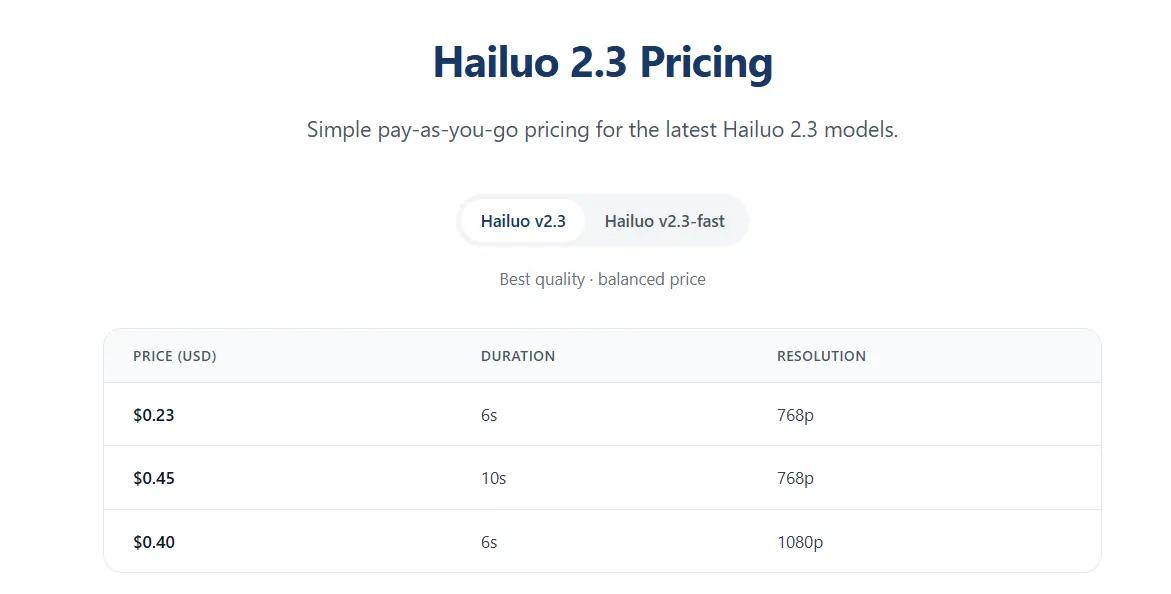
Toutes les informations de tarification sont exactes au moment de la rédaction et sont susceptibles de changer selon les dernières mises à jour API.
Hailuo API Docs and Kling API Docs , or visit our pricing pages.
Évaluation : Comment Nous Comparons Hailuo AI vs Kling 2.6
Pour cette comparaison, nous évaluons Hailuo AI et Kling 2.6 sur plusieurs scénarios utilisant des prompts identiques. Cela garantit que les différences de sortie sont dues au comportement du modèle plutôt qu'à la variation du prompt.
The evaluation framework is adapted from a Labelbox-style assessment and focuses on four key dimensions: 1. Prompt adherence 2. Motion realism 3. Temporal consistency 4. Artifacts
Chaque exemple est conçu pour tester un aspect spécifique de la génération vidéo, incluant la composition de scène, le mouvement humain, l'interaction multi-sujets et le détail environnemental. Toutes les sorties sont générées dans des conditions comparables pour maintenir la cohérence à travers l'évaluation.
Exemple 1 : Dynamique des Fluides et Logique Environnementale
Prompt: A macro, slow-motion shot of dark roasted espresso dripping into a ceramic cup at a modern catering event setup in Singapore. Steam gently rises from the surface of the hot coffee, curling and interacting with a warm, overhead spotlight. 16:9 aspect ratio. Silent.
Hailuo Output
Kling Output
Evaluation
Hailuo AI et Kling 2.6 interprètent la scène différemment. Kling 2.6 capture l'éclairage et tente de refléter l'environnement de restauration, mais manque la perspective macro et introduit une incohérence structurelle où l'espresso semble provenir d'une source irréaliste. Hailuo AI délivre avec précision le style macro, ralenti avec une composition plus propre, bien qu'il simplifie l'arrière-plan et réduise le détail environnemental.
En termes de mouvement, Hailuo AI produit un comportement de liquide plus cohérent physiquement, avec une formation de gouttelettes naturelle et un mouvement de vapeur subtil. Kling 2.6 génère des effets de vapeur plus dramatiques, mais l'écoulement du liquide semble moins stable.
Dans l'ensemble, Hailuo AI délivre un résultat plus réaliste et stable dans ce scénario, tandis que Kling 2.6 suit davantage les indices environnementaux mais avec des incohérences notables.
Exemple 2 : Interaction Humaine et Gestes
Prompt: Two colleagues sitting across each other in a modern office meeting room, having a discussion. One person is speaking and gesturing naturally with their hands, while the other listens and nods. Soft indoor lighting, shallow depth of field, camera slowly pans from left to right. 16:9 aspect ratio.
Hailuo Output
Kling Output
Evaluation
Hailuo AI et Kling 2.6 manquent tous deux l'instruction "assis face à face", plaçant les deux sujets du même côté. Kling 2.6 suit précisément le mouvement de caméra, tandis que Hailuo AI capture mieux la faible profondeur de champ mais maintient un cadre majoritairement statique.
Hailuo AI montre un mouvement corporel plus naturel, mais introduit un artefact majeur où la main perd sa structure pendant les gestes. Kling 2.6 apparaît plus rigide, mais maintient une forte cohérence avec seulement des problèmes mineurs.
Dans l'ensemble, Kling 2.6 délivre un résultat plus stable et utilisable, tandis que Hailuo AI offre un mouvement plus fluide mais avec des artefacts notables.
Exemple 3 : Mouvement Rapide et Dynamique de Caméra
Prompt: An aggressive FPV drone shot following a bright orange sports car drifting around a sharp curve on a winding mountain road. Dense pine forests surround the road. Golden hour lighting casts long shadows. Thick white smoke billows from the rear tires as the car slides. The camera banks and tilts dynamically to follow the car's movement. 16:9 aspect ratio.
Hailuo Output
Kling Output
Evaluation
Hailuo AI et Kling 2.6 gèrent la scène différemment. Kling 2.6 capture le mouvement de caméra agressif et l'action de dérapage, mais manque la couleur de la voiture et montre une instabilité alors que la forme et la couleur de la voiture changent pendant le mouvement. Hailuo AI suit la configuration de la scène de plus près, maintenant une structure et une couleur de voiture cohérentes, mais simplifie l'action avec une caméra plus statique et un dérapage moins prononcé.
En termes de mouvement, Kling 2.6 délivre un mouvement de caméra plus dynamique et un impact visuel plus fort, bien que le comportement de la voiture devienne moins cohérent physiquement vers la fin. Hailuo AI produit un mouvement plus ancré et stable, mais manque l'intensité décrite dans la scène.
Dans l'ensemble, Kling 2.6 produit un résultat plus cinématographique, tandis que Hailuo AI délivre une sortie plus propre et cohérente.
Exemple 4 : Détail Fin et Micro Mouvement
Prompt: A close-up shot of a hand slowly brushing through tall green grass in a windy field during sunset. Individual blades of grass move naturally in the wind, with soft golden hour lighting and shallow depth of field. The camera remains steady, focusing on fine detail and subtle motion. 16:9 aspect ratio.
Hailuo Output
Kling Output
Evaluation
Hailuo AI et Kling 2.6 gèrent tous deux bien la scène, mais avec des résultats différents. Hailuo AI suit de près la scène, capturant de hautes herbes vertes, un fort éclairage d'heure dorée et une faible profondeur de champ propre. Kling 2.6 suit la configuration mais génère un feuillage qui ressemble plus au blé qu'à l'herbe.
En termes de mouvement, Hailuo AI montre une interaction plus réaliste, avec l'herbe qui se plie et se sépare naturellement autour de la main. Kling 2.6 produit une main très détaillée, mais l'interaction semble moins physique, avec des doigts qui semblent passer à travers les plantes.
Les deux modèles maintiennent une forte cohérence tout au long, avec une structure stable tant pour la main que pour l'environnement. Hailuo AI reste propre dans l'ensemble, tandis que Kling 2.6 montre des artefacts d'interaction mineurs.
Dans l'ensemble, Hailuo AI délivre un résultat plus ancré physiquement et précis dans ce scénario, tandis que Kling 2.6 met l'accent sur le détail visuel mais avec une interaction moins réaliste.
Exemple 5 : Interaction Multi-Sujets et Cohérence de Scène
Prompt: A group of friends sitting around a campfire at night, one playing guitar while others roast marshmallows. Warm firelight illuminates their faces, sparks rise into the air, and the camera slowly circles the group. Natural interaction between characters, cinematic atmosphere, shallow depth of field. 16:9 aspect ratio.
Hailuo Output
Kling Output
Evaluation
Hailuo AI et Kling 2.6 suivent tous deux bien la scène, générant plusieurs sujets, la lumière du feu et le mouvement de caméra. Hailuo AI produit un groupe plus large, tandis que Kling 2.6 opte pour une composition plus petite et ciblée.
En termes de mouvement, les deux modèles capturent l'interaction naturelle et le mouvement ambiant. Hailuo AI montre des dynamiques de groupe légèrement plus actives, tandis que Kling 2.6 délivre un ressenti plus contrôlé et cinématographique. Les deux maintiennent une forte cohérence temporelle, avec des sujets et environnements stables tout au long.
Cependant, les deux luttent avec l'interaction d'objets. Hailuo AI introduit des problèmes avec des bâtons de guimauve qui se plient et se transforment, tandis que Kling 2.6 produit un artefact structurel plus sévère où un bâton de guimauve semble fusionné avec la guitare.
Dans l'ensemble, les deux sorties montrent des limitations dans la gestion des interactions d'objets complexes, mais Hailuo AI reste légèrement plus stable, tandis que Kling 2.6 introduit des incohérences structurelles plus perturbatrices.
Conclusion
Hailuo AI et Kling 2.6 démontrent tous deux de fortes capacités en génération vidéo IA, mais les différences deviennent claires lorsqu'ils sont testés dans des scénarios réels.
Hailuo AI produit constamment des sorties plus stables et physiquement cohérentes, particulièrement dans des domaines comme le mouvement des fluides, l'interaction de détails fins et la cohérence structurelle globale. Il tend à gérer les objets et environnements de manière plus fiable, rendant les résultats plus propres et utilisables dans différents cas d'utilisation.
Kling 2.6, d'autre part, délivre des sorties plus dynamiques et visuellement engageantes, particulièrement dans les scènes impliquant des mouvements de caméra et une composition cinématographique. Cependant, cela s'accompagne souvent de compromis en cohérence et d'artefacts structurels occasionnels dans des scénarios plus complexes.
Dans l'ensemble, Hailuo AI est mieux adapté aux flux de travail qui priorisent la stabilité et la cohérence, tandis que Kling 2.6 est un choix plus fort pour les scénarios qui bénéficient d'un mouvement plus cinématographique et d'un impact visuel.
Hailuo AI and Kling 2.6 API keys via PiAPI today!