

Trellis vs Trellis 2: Which 3D Generation API Should You Use?
The development of AI-driven 3D generation models has introduced new possibilities for creating structured 3D assets from minimal inputs. Among these, Trellis and Trellis 2 represent two iterations of a structured 3D generation approach designed for scalable and versatile asset creation.
While both models focus on generating 3D representations such as meshes and textured objects, Trellis 2 introduces improvements in structure consistency, geometry quality, and overall generation stability. The practical difference, however, depends on how these improvements translate into usable 3D outputs.
In this comparison, we evaluate Trellis vs Trellis 2 across generation quality, structural consistency, and usability for workflows such as 3D product visualization, 3D asset creation, and AI-driven modeling pipelines.
What is Trellis?
Trellis is an AI-powered 3D generation framework built around structured 3D latent representations, designed to convert images (and increasingly text) into usable 3D assets. At its core, Trellis focuses on:
- Structured 3D latent modeling for scalable generation
- Flexibility for downstream pipelines (games, AR/VR, simulation)
The Trellis API is available for developers who plan on scaling their products.
Get more information on Trellis AI with our previous blog!
What is Trellis 2?
Trellis.2 is the latest open-source model by Microsoft, and it represents a major leap in image-to-3D generation quality and efficiency.
Trellis 2 Microsoft is a 4B-parameter model capable of generating high-fidelity, fully textured 3D assets from a single image.
Key Innovations in Trellis 2:
- Voxel representation (field-free geometry)
- Native 3D VAE with structured latents
- Full PBR material generation (metallic, roughness, opacity)
- Handles complex topology (thin structures, hollow shapes)
These improvements make Trellis 2 more suitable for production workflows such as 3D product animation and 3D product visualization, where asset quality and consistency are critical.
The Trellis 2 API is available for developers who plan on scaling their products.
Trellis: 3D Generation API Model Similarities
Despite differences in generation quality, both models share core capabilities.
Structured 3D Generation
Both Trellis and Trellis 2 use structured latent representations to generate 3D objects, enabling consistent geometry creation.
Mesh-Based Output
Both models produce Trellis mesh outputs that can be exported and used in 3D pipelines.
Prompt-Based Generation
Both support prompt-driven workflows, allowing users to generate 3D assets such as objects, characters, or product models.
Scalable 3D Asset Creation
Both models are suitable for generating assets for applications like 3D product visualization and concept prototyping.
Key Differences: Trellis vs Trellis 2
Geometry Quality
Trellis 2 produces more consistent and refined geometry compared to Trellis, with improved edge definition and fewer structural inconsistencies.
Texture and Surface Detail
Trellis 2 generates more coherent textures and smoother surface transitions, making outputs more suitable for visual presentation.
Multi-View Consistency
Trellis 2 demonstrates stronger consistency across different viewing angles, reducing distortions when rotating the model.
Generation Stability
Trellis 2 shows improved stability in generation, producing fewer artifacts and more reliable outputs across prompts.
Production Readiness
While Trellis is suitable for experimentation and prototyping, Trellis 2 is better suited for production workflows requiring higher quality assets.
Evaluation: How We Compare Trellis vs Trellis 2
Both models were compared with through image to 3D generation task. The images are generated with the Nano Banana 2 API and no prompts were used for image to 3D task. To ensure a fair comparison, both models were evaluated using identical reference images and follow their corresponding documentations, Trellis API documentation and Trellis 2 API documenation.
The evaluation focuses on:
1. Geometry accuracy
2. Surface detail
3. Texture consistency
4. Artifacts and distortions
3D Output Comparison: Trellis vs Trellis 2
Example 1: Game Object Model
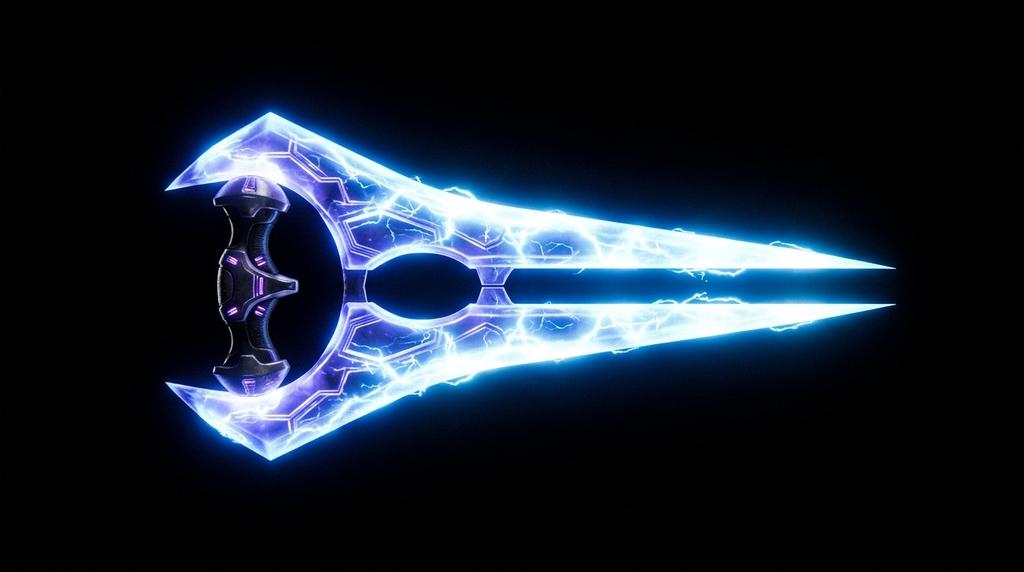
For the first example, we will generate an Energy Sword for you Halo fans out there!
Trellis AI Comparison
Analysis: Trellis 2 demonstrates strong geometry accuracy and recognizable structure, successfully capturing the overall form of the Energy Sword. In contrast, Trellis fails to produce a recognizable output, indicating weak structural consistency. No major artifacts are observed in Trellis 2.
Example 2: Character Figure
We are sure you know about this one! For the second example, we did a 3D generation for Luffy from One Piece.

Trellis AI Comparison
Analysis: Trellis 2 performs well in shape consistency and overall character structure, producing a recognizable result. Trellis, however, fails to generate a coherent and identifiable figure, showing limitations in handling character-based generation. Trellis 2 maintains better structural integrity with minimal artifacts.
Example 3: Complex Object
Lastly, we generated a really complex object with many intricate details, Mount Rushmore.

Trellis AI Comparison
Analysis: Both Trellis and Trellis 2 struggle with this complex object, failing to accurately match the reference. The outputs lack structural accuracy and detail, highlighting limitations in handling really complex generations. No clear advantage is observed between the two models in this case.
Final Thoughts: Trellis vs Trellis 2
Across the three evaluated examples, Trellis 2 demonstrates clear improvements in geometry accuracy and overall structural consistency compared to the original Trellis model. In both the Energy Sword and Luffy examples, Trellis 2 is able to produce recognizable outputs, while Trellis fails to generate coherent structures.
However, when tested on more complex scenes such as Mount Rushmore, both models struggle to maintain accuracy and detail, highlighting current limitations in handling large-scale, multi-subject environments.
Overall, Trellis 2 provides a significant step forward in 3D generation quality and reliability, making it more suitable for practical use cases. While the original Trellis model may still serve for experimentation, Trellis 2 offers a stronger foundation for workflows requiring recognizable and structurally consistent 3D outputs.
Start testing both models and get your Trellis AI Key via PiAPI today!
Unlock the power of 20+ AI models with PiAPI — image, video, chat, music, and more. Sign up today and start building smarter, faster and at scale.