
Qwen Image API Prompting Guide: Multilingual Prompts & Best Practices
Most AI image generation guides assume one thing - You ideate and create only in English.
But that's not the complete picture. Teams around the world operate in various languages.
Designers in Shanghai think Chinese.
Marketers in Tokyo write copies in Japanese.
Creators in São Paulo brainstorm in Spanish.
Translating every brilliant idea into English to create with an AI model can be laborious and resource-intensive. But Qwen Image AI changes that: it understands prompts in 26+ languages, letting you generate visuals directly in the language you think in - no translation friction, no creative delay.
In this article, we'll explore why multilingual image generation is a game-changer, see how Qwen Image's 26+ language support transforms real workflows, and share practical prompts you can use immediately.
What is Qwen Image?
Qwen Image is a text-to-image or T2I model from the Qwen AI family that generates high-quality images from natural language prompts. Unlike many models that are mainly tuned for English, Qwen Image features a robust understanding on a wide range of languages, including (but not limited to):
1. English
2. Chinese
3. Japanese
4. Korean
5. Spanish
6. French
7. German
8. Portuguese
9. and others
The key idea: you don’t have to translate your thoughts into English first. You describe what you want in your language to Qwen Image AI and that's it. All you need to get started is your Qwen API key and leave the rest to your imagination!
Why multilingual support actually matters for Qwen API?
"Supports 26+ languages" sounds like a spec line - until you look at how people really work. Below are 3 reasons why Qwen Image is ideal for your workflow!
1. Less friction for non-English-first teams
If your team speaks Chinese, Japanese, Spanish, Arabic, or any other language day-to-day, English prompts are just another barrier. You think in your language, translate to English, hope the translation captures what you actually meant, paste it into the model, and then spend time debugging whatever weird outputs came from awkward phrasing. It's a lot of friction. With Qwen Image AI, you skip that whole loop - you prompt in your native language and get straight to iteration.
2. Better local nuance and cultural context
Here's the thing: some ideas just don't translate cleanly. "ins风日系咖啡馆" has a specific vibe in Chinese internet culture that "Instagram-style Japanese cafe" completely misses. Same with "治愈系插画"-"healing-style illustration" loses all the emotional weight. Throw in local festivals, regional street food names, slang across Spanish, Japanese, Korean, and you realize how much nuance gets lost when you're forced to work in English. When you can prompt in your native language, the model actually gets what you're going for.
3. Global products, local visuals
If you're running a brand across multiple markets, you don't just need one hero visual - you need local versions. Different text, different regional aesthetics, different cultural references. Multilingual prompting means each market team can create visuals tailored to their audience without needing someone who's fluent in English-first prompting.
Qwen Image API Examples
We’ll generate a few Qwen-image examples across different languages and use cases, so you can see how AI image generation performs optimally with our Qwen Image API.
Example 1: Chinese social media post
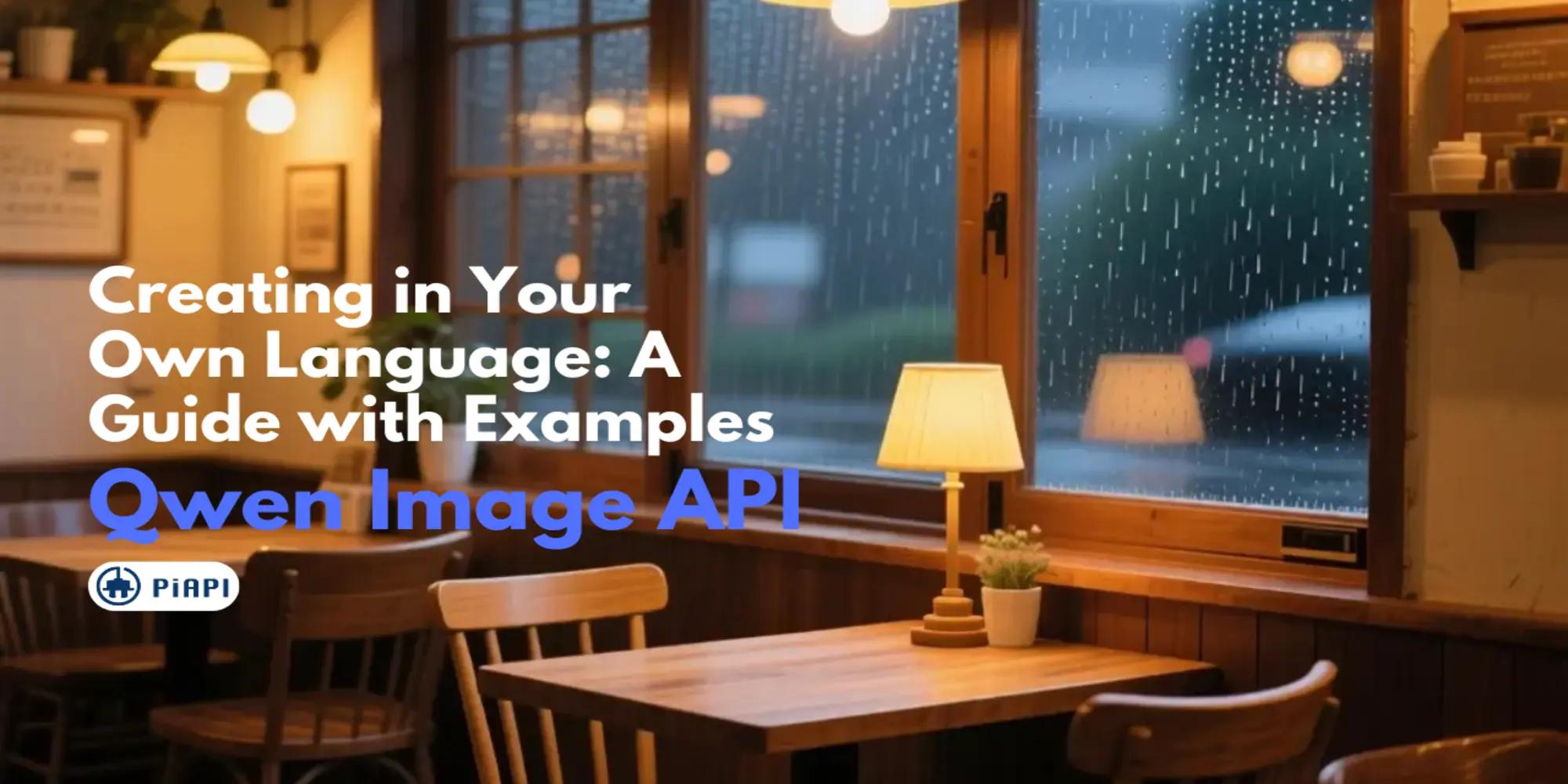
For this first example, we’ll generate an image using a Chinese prompt. In English, it roughly translates to: “A cozy interior shot of a Japanese-style, Instagram-aesthetic café at dusk, with wooden tables and chairs, warm yellow lighting, and light rain falling outside the window. The atmosphere feels soft and comforting, and the image is suitable as a social media promotional visual.”
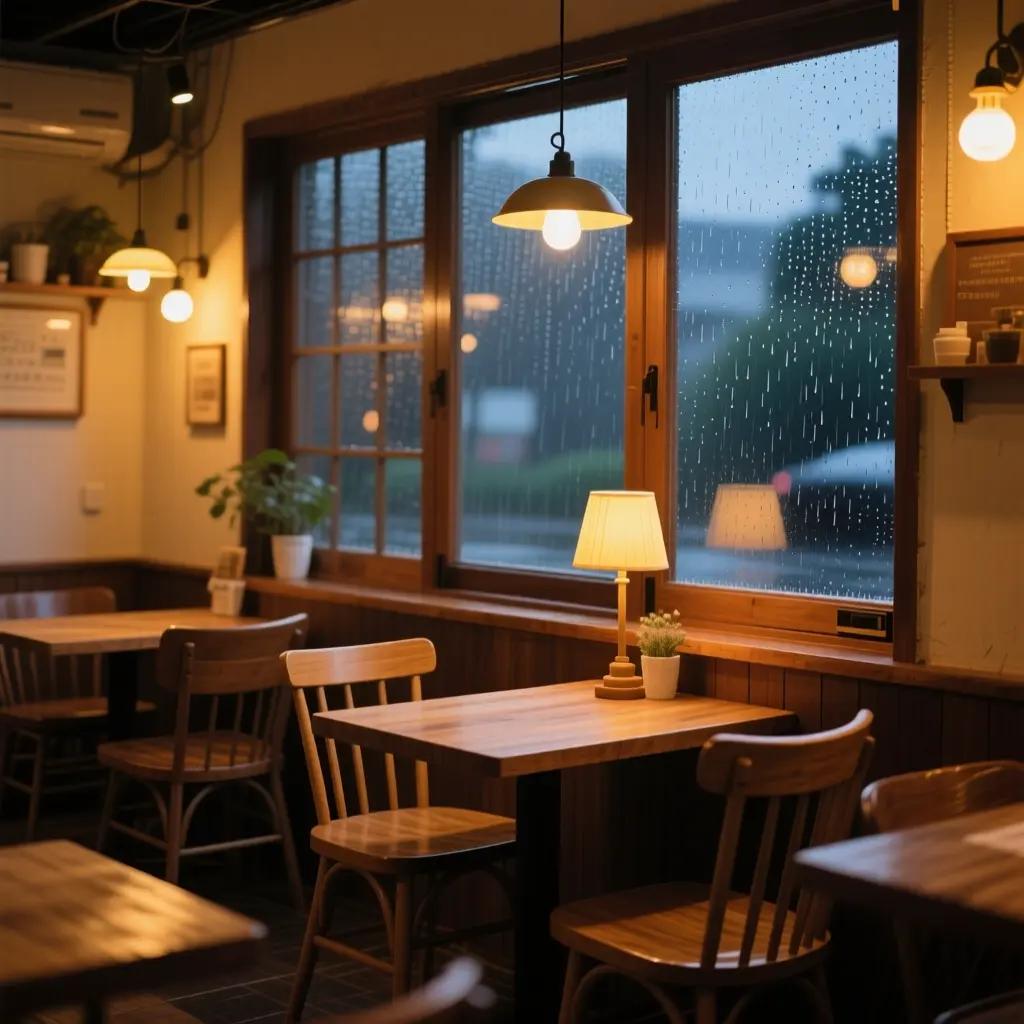
In this example, we use a Chinese prompt to brief a cozy, Japanese-style café scene for social media. Instead of translating “日系ins风” or “治愈系氛围” into awkward English, our team can describe the vibe directly in Chinese and let Qwen Image handle the rest. This keeps both cultural nuance and creative speed in our daily content workflows.
Example 2: Japanese kawaii-style illustration
Next, we’ll switch to a Japanese prompt. Translated into English, it reads: “A cute pastel-colored illustration of a cat character working on a laptop. The mood is gentle and friendly, with a composition that works well as a social media icon.”
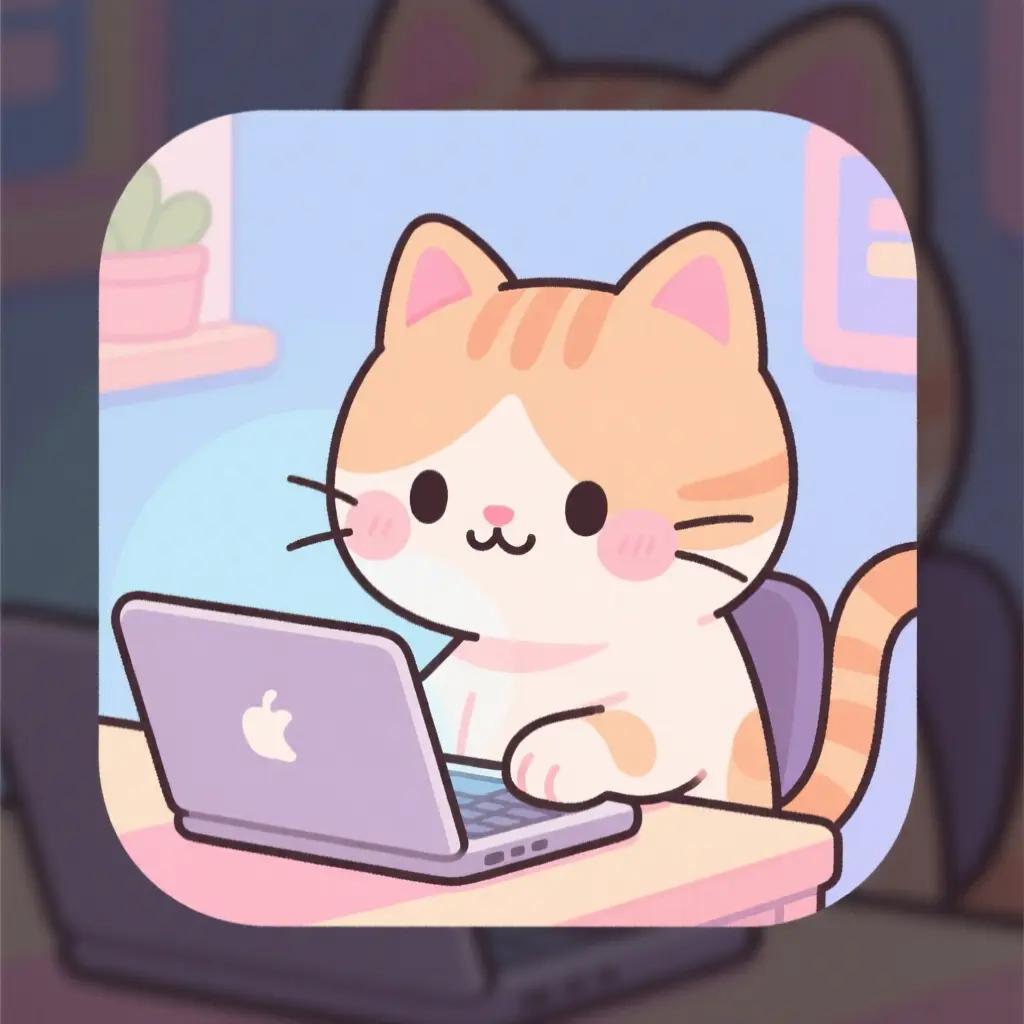
Here, we prompt a pastel, kawaii-style cat character working on a laptop entirely in Japanese. Our designers can write naturally - using phrases like “やさしい雰囲気” and “SNS用アイコン” - without switching mental context into English. That means faster production of mascots, icons, and character assets that still feel authentically Japanese.
Example 3: Korean beauty banner
For our third example, we’ll generate an image using a Korean prompt. In English, the prompt is: “A clean advertising image with Korean skincare products neatly arranged on a white background, lit by soft natural light. The overall look is minimal and modern, with empty space at the top to add a Korean slogan.”
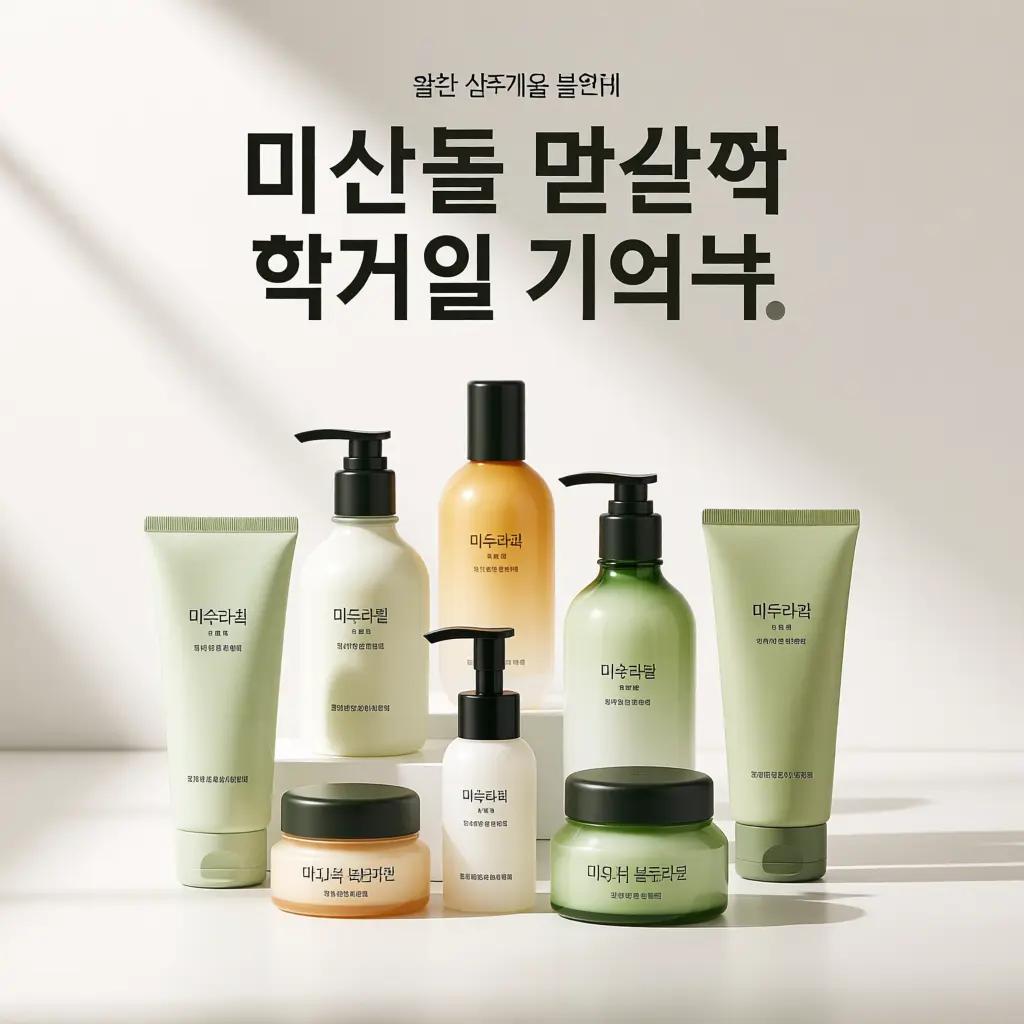
In the Korean example, we brief a clean skincare product shot with soft natural light and space for a Korean slogan. This mirrors exactly how our team would describe a K-beauty banner internally, just now fed straight into Qwen Image. The result: ad-ready hero images and PDP visuals generated from a single Korean sentence.
Example 4: Spanish food festival poster
Now let’s look at a Spanish prompt. Translated into English, it says: “A colorful poster for a Latin American street food festival, with illustrations of tacos, arepas, empanadas, and fresh juices. The style is modern and eye-catching, with space at the bottom to add the date and location.”
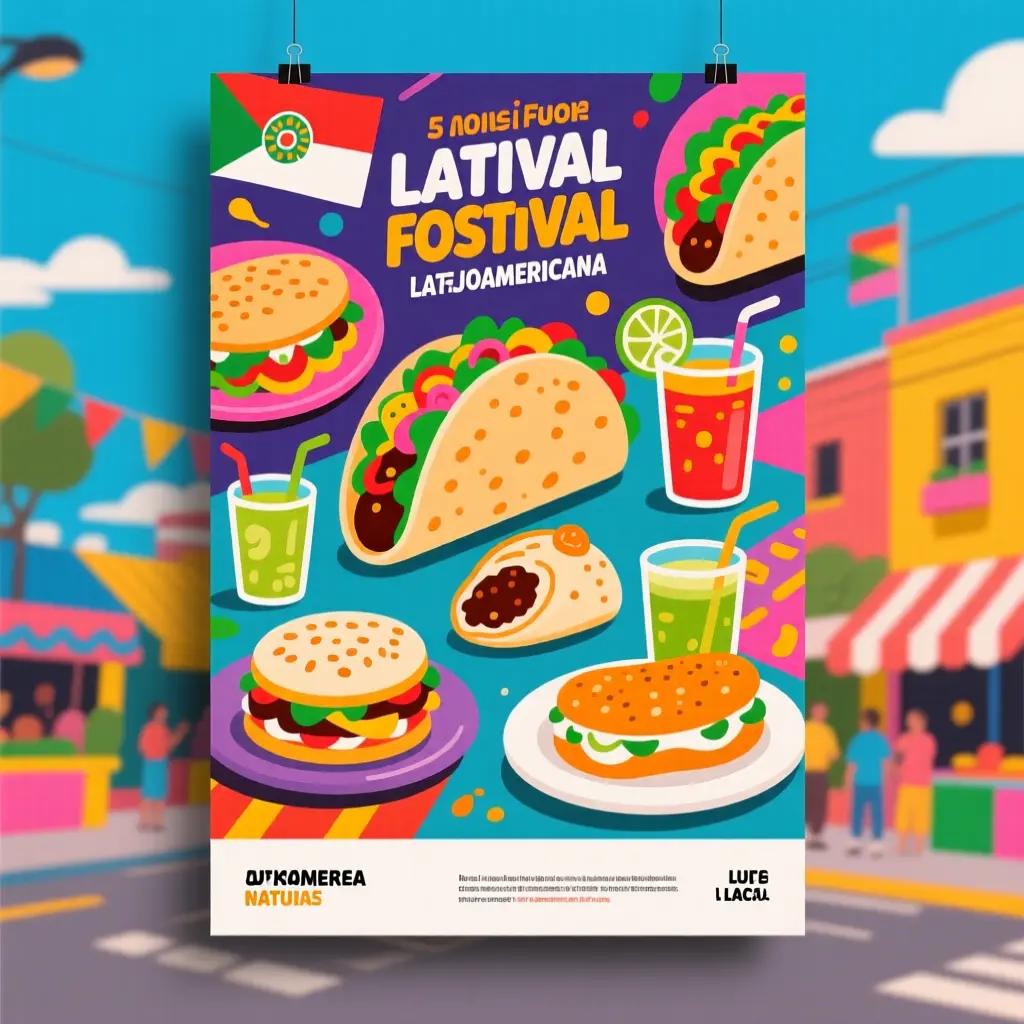
For Spanish, we generate a colorful poster for a Latin American street food festival with tacos, arepas, empanadas and fresh juices. Our marketing team can brief the asset in fluent Spanish, keeping local food names and tone natural. Qwen Image turns that into a ready-to-iterate festival poster without forcing us into English-first thinking.
Example 5: Arabic elegant event graphic
Finally, we’ll generate an image using an Arabic prompt. In English, this prompt means: “An elegant design for an evening event invitation, with a dark background and simple gold ornaments, leaving space in the center to write an Arabic title.
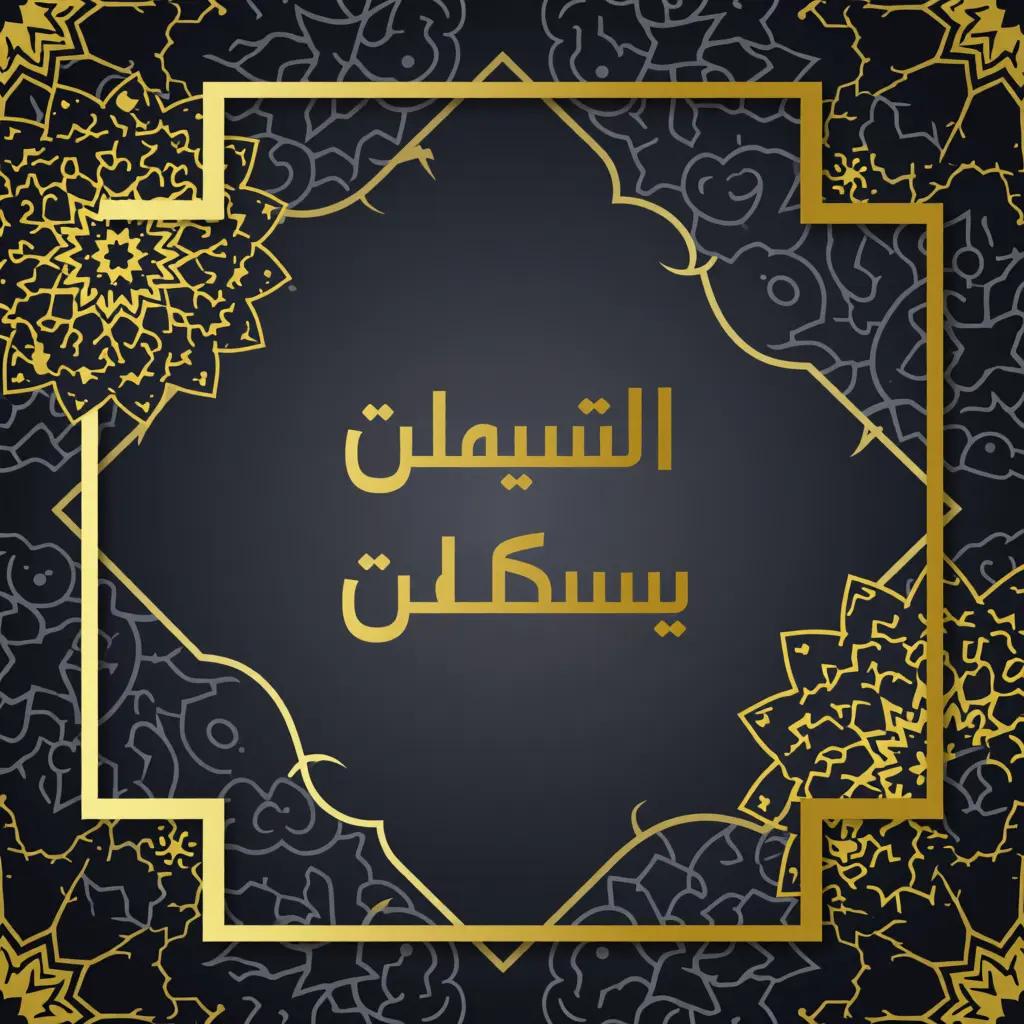
In the Arabic example, we ask for an elegant evening event invitation with a dark background, gold accents, and space for an Arabic title. This matches how our team designs premium social posts and invites for MENA audiences. Qwen Image allows us to brief directly in Arabic while maintaining a modern, luxurious visual style.
More examples can be found in on our Qwen Image API page!
Qwen Image API with PiAPI
Once your prompt is ready, wiring it into your PiAPI integration is just as straightforward. In your workflow, you select the Qwen Image API, pass the prompt string (in any supported language), and optionally specify parameters like seed value, image size, number of steps, or style preferences. With our Qwen Image API, you stay in control of the creative intent, while we handle the heavy lifting behind the scenes.
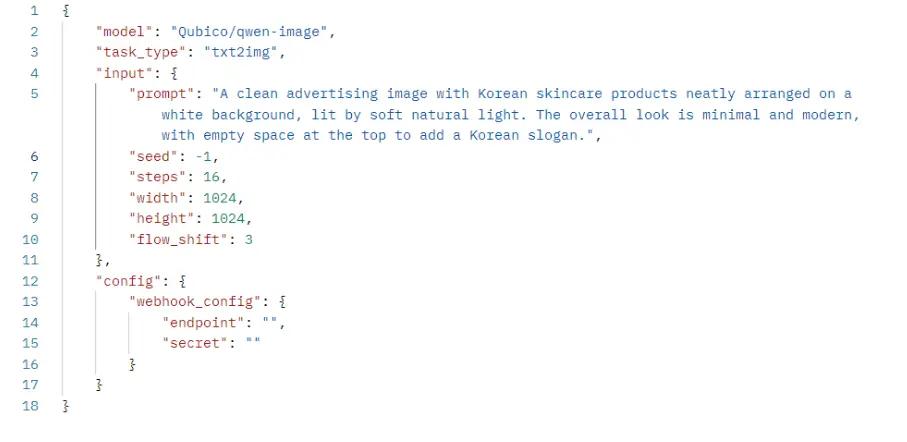
We keep the developer experience simple by managing all the backend image generation for you. From there, your team can decide whether to send the generated image into a CMS, plug it into a design system, feed it into a creative automation flow, or embed it directly in whatever internal tools you use to ship campaigns.
Conclusion
For our team, Qwen AI API’s support for 26+ languages isn’t just a nice line in the spec sheet - it changes how we actually work day to day. Designers, marketers, and product folks in different regions can brief visuals in their own language, keep cultural nuance intact, and still rely on a single, consistent AI image generation stack.
Instead of forcing everyone to think and prompt in English, we let people describe what they want in the way that feels natural to them and our Qwen API meets them there.
If you’re building for multiple markets, it’s worth trying the same thing: write your next prompt in your own language, not English, and see how far you can go. Get started with your Qwen AI API key today!
Unlock the power of 20+ AI models with PiAPI — image, video, chat, music, and more. Sign up today and start building smarter, faster and at scale.