

Wan 2.6 vs Kling 2.6: Which AI Video Model Is Better for Production in 2026?
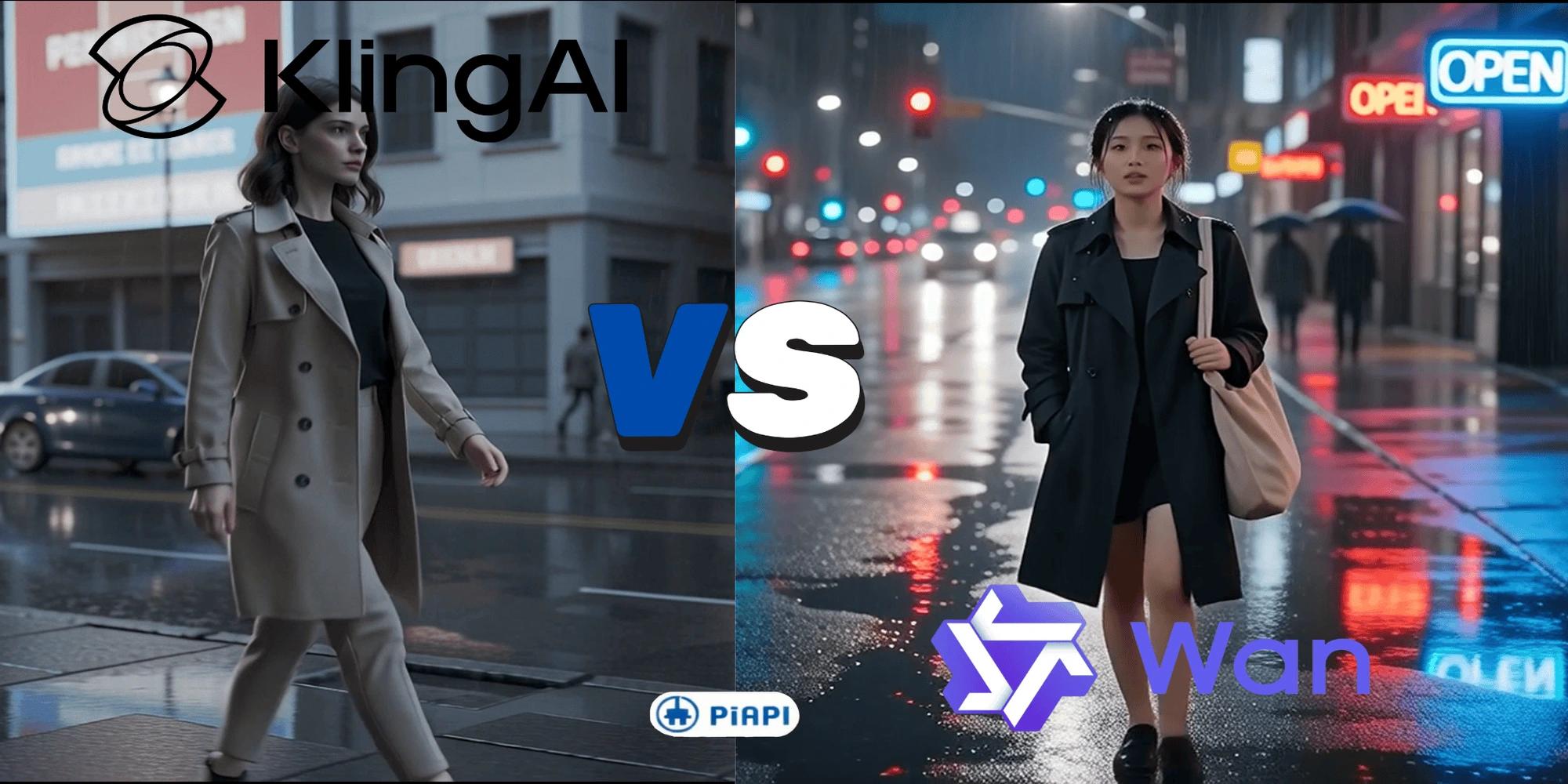
Wan 2.6 and Kling 2.6 Wan 2.6 API and Kling 2.6 API
What is Wan 2.6
Alibaba Wan 2.6 is an AI video generation model designed for structured and consistent output. It focuses on controllability, allowing users to guide scenes more precisely through prompts.
Compared to more cinematic-focused models, Wan 2.6 is built for stability and repeatability. This makes it useful for workflows where consistent results matter, especially when using the Wan 2.6 API in production environments.
Wan 2.6 also offers accessible testing options, including Wan 2.6 free access, making it easier for developers and creators to evaluate before scaling.
What is Kling 2.6
Kuaishou Kling 2.6 is an AI video generation model focused on realism and motion quality. It is designed to produce more cinematic outputs, with smoother transitions and more natural movement compared to earlier versions.
Kling Video 2.6 stands out in how it handles complex scenes and dynamic motion. This makes it strong for use cases like storytelling, marketing visuals, and content creation where visual impact matters more than strict control.
The Kling 2.6 API is built for scalable video generation, but factors like Kling 2.6 price and resource usage can become important when moving into production.
Model Similarities and Differences
Despite targeting slightly different use cases, Wan 2.6 and Kling 2.6 share the same core foundation. Both models generate videos from text prompts, support structured prompting, and can be integrated through the Wan 2.6 API and Kling 2.6 API for scalable workflows. The key differences come from how each model is positioned and optimized.
Video Quality
Kling 2.6 is often positioned around cinematic visuals, with a focus on realism, lighting, and overall polish. Wan 2.6 is generally associated with more consistent outputs, though visual style may vary depending on the prompt and generation.
Motion Performance
Kling 2.6 emphasizes smooth and dynamic motion, particularly in more complex scenes. Wan 2.6 tends to prioritize controlled and stable motion, which may result in more predictable outputs.
Prompt Adherence
Wan 2.6 is designed to handle structured prompts reliably, especially when multiple elements are involved. Kling 2.6 also performs well with prompts, though results can vary depending on scene complexity.
Generation Stability
Wan 2.6 is generally positioned as a more stable model with consistent outputs. Kling 2.6 can produce highly detailed results, but stability may vary in more complex generations.
Speed and Efficiency
Wan 2.6 is typically more efficient for repeated or large-scale generation. Kling 2.6 focuses more on output quality, which may come with higher resource usage.
Pricing Comparison
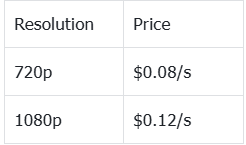
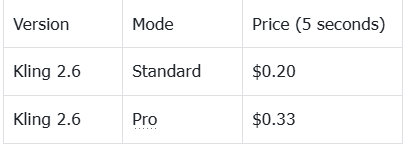
Pricing is an important factor when choosing between Wan 2.6 and Kling 2.6, especially for production use where costs scale quickly with usage.
Pricing for Wan 2.6 is as follows:
Pricing for Kling 2.6 is as follows:
Kling 2.6 API Docs and Wan 2.6 API Docs.
Evaluation Method
Each generated video is assessed across:
1. Prompt adherence 2. Video quality 3. Motion consistency 4. Visual artifacts
All examples use the same prompts for both Wan 2.6 and Kling 2.6 to isolate model performance.
Example 1: Simple Scene
Prompt:
A calm beach at sunset with gentle waves slowly rolling toward the shore, soft golden hour lighting casting warm tones across the sand and water, clear sky with light scattered clouds, subtle reflections on the wet sand, no people, wide cinematic shot, smooth and natural motion, high detail, realistic lighting
Wan 2.6 Output
Kling 2.6 Output
Example 1 Evaluation
Both Wan 2.6 and Kling 2.6 adhere well to the prompt, delivering a serene beach scene with accurate golden hour lighting and clean compositions.
Wan 2.6 excels in visual stability and color clarity. Reflections on the wet sand are well-defined and consistent across frames. However, the wave motion feels slightly artificial, resembling a timelapse or "living photo" rather than natural, real-time movement. While the output is clean, the physical motion feels less grounded.
Kling 2.6 delivers stronger motion realism. The waves break and recede with more natural weight, and foam behavior appears more physically accurate. Lighting is also more cinematic and less processed overall, although minor grain can appear in more detailed textures.
In this example, Wan 2.6 leads in stability and clarity, while Kling 2.6 stands out in motion realism and overall cinematic quality.
Example 2: Human Subject + Motion
Prompt:
A young woman walking through a busy city street at night, neon signs glowing in the background, light rain falling, reflections on the wet pavement, natural walking motion, slight camera tracking from the side, cinematic lighting, realistic human proportions, detailed face, smooth and natural movement
Wan 2.6 Output
Kling 2.6 Output
Example 2 Evaluation
Both Wan 2.6 and Kling 2.6 generate a cinematic rainy city scene, with clear reflections on wet pavement and strong overall prompt adherence.
Wan 2.6 produces a visually striking output, with high contrast, vibrant neon lighting, and sharp foreground detail. The integration of rain elements, such as droplets on the subject and environment, is well executed. However, the motion feels less continuous, with quick cuts that reduce the sense of a natural walking sequence.
Kling 2.6 delivers a more stable tracking shot, maintaining consistent human proportions and a natural walking gait. The movement of the subject, including subtle details like coat sway, feels more physically grounded. While the lighting is more muted and background details appear slightly softer, overall motion continuity is significantly stronger.
In this example, Wan 2.6 stands out in visual atmosphere and detail, while Kling 2.6 performs better in motion consistency and tracking realism.
Example 3: Complex Motion Scene
Prompt:
A fast-paced street chase scene with a man running through a crowded market, people moving in different directions, stalls with hanging fabrics and objects, dynamic camera movement following from behind, slight camera shake, cinematic lighting, motion blur, realistic human movement, high detail, smooth and continuous action
Wan 2.6 Output
Kling 2.6 Output
Example 3 Evaluation
Both Wan 2.6 and Kling 2.6 handle a high-intensity chase scene through a crowded market, testing complex motion and multi-subject interaction.
Wan 2.6 produces a more dramatic output, using dynamic cuts and vibrant lighting to enhance intensity. However, fast motion introduces inconsistencies, including slight grounding issues and visible ghosting in background elements.
Kling 2.6 maintains a stable tracking shot with more consistent character movement and better spatial interaction with the environment. While the visuals are less stylized, motion feels more physically grounded overall.
In this example, Wan 2.6 emphasizes cinematic style, while Kling 2.6 performs better in motion consistency and stability.
Example 4: Cinematic Storytelling Scene
Prompt:
A lone astronaut standing on a vast alien landscape under a purple sky with two moons, slow camera push-in, dramatic cinematic lighting, wind blowing dust across the ground, emotional and atmospheric mood, high detail, realistic textures, smooth and natural motion
Wan 2.6 Output
Kling 2.6 Output
Example 4 Evaluation
Both Wan 2.6 and Kling 2.6 successfully generate a cinematic sci-fi scene, capturing the astronaut, alien landscape, and dual moons with strong prompt adherence.
Wan 2.6 delivers a clean and vibrant output, with sharp visor reflections and clear facial detail. However, the astronaut's movement feels slightly static, and the overall scene lacks deeper cinematic blending.
Kling 2.6 produces a more atmospheric and cohesive result. Environmental effects like dust and fog interact more naturally with the subject, and lighting feels better integrated. The slow camera push-in adds a stronger cinematic feel, though facial detail inside the visor is less defined.
In this example, Wan 2.6 stands out in subject clarity, while Kling 2.6 leads in atmospheric realism and cinematic composition.
Example 5: Multi-Subject Interaction (Stress Test)
Prompt:
A group of three friends sitting around a campfire at night, talking and laughing, one person roasting marshmallows, another playing guitar, sparks flying from the fire, warm firelight illuminating faces, subtle camera movement circling the group, natural human interaction, realistic motion, high detail
Wan 2.6 Output
Kling 2.6 Output
Example 5 Evaluation
Both Wan 2.6 and Kling 2.6 follow the prompt well, generating a warm campfire scene with clear character interactions, including guitar playing and roasting marshmallows.
Wan 2.6 delivers a vibrant and high-contrast result, with sharp facial expressions and clean close-up details. Fire lighting is punchy and well-defined. However, motion feels less consistent, particularly in the guitar interaction, and frequent cuts break the sense of a continuous scene.
Kling 2.6 produces a more cohesive, single-shot output with natural night-time lighting. Firelight and sparks interact more realistically with the environment, and character movements, especially hand motions, feel smoother and more physically grounded. While the visuals are slightly more muted, the overall scene feels more unified.
In this example, Wan 2.6 stands out in detail and clarity, while Kling 2.6 performs better in continuity and natural motion.
Final Verdict: Wan 2.6 vs Kling 2.6
Wan 2.6 and Kling 2.6 both deliver strong results for AI video generation, but they are optimized for different priorities.
Wan 2.6 stands out in visual clarity, structured outputs, and overall stability. It performs well in controlled scenarios, where clean frames, sharp details, and predictable results matter. This makes it a practical choice for workflows that require consistency and efficiency, especially when using the Wan 2.6 API at scale.
Kling 2.6, on the other hand, consistently delivers more natural motion, better scene continuity, and stronger cinematic realism. Across multiple examples, it handles movement, camera tracking, and environmental interaction more effectively, making it better suited for content that prioritizes visual storytelling and realism.
Overall, Wan 2.6 is the better option for stability and structured generation, while Kling 2.6 is the stronger choice for motion realism and cinematic output. For most production use cases where realism and motion quality are critical, Kling 2.6 has a clear edge.