
Nano Banana Pro vs Nano Banana 2: Google Nano Banana API Comparison with Examples
The evolution of lightweight image generation models has introduced increasingly capable systems for fast and flexible visual creation. Within the Google Nano Banana API ecosystem, both Nano Banana 2 and Nano Banana Pro represent two distinct approaches to balancing efficiency and image quality.
Through the Nano Banana API, developers can generate images using structured prompts and integrate AI image generation directly into applications. While the earlier released Google Nano Banana Pro introduces improved realism, stronger prompt interpretation, and enhanced visual consistency, Nano Banana 2 AI focuses on speed and scalable generation.
In this comparison, we evaluate Nano Banana Pro vs Nano Banana 2 using controlled examples to understand differences in prompt alignment, photorealism, and output quality.
What is Nano Banana 2?
Nano Banana 2 (Gemini 3.1 Flash Image) is an updated version of the base model, available through the Nano Banana 2 API, designed to improve baseline image quality while maintaining efficiency.
It remains optimized for scalable workflows, making it suitable for applications where Nano Banana API cost and generation speed are key considerations.
What is Nano Banana Pro?
Nano Banana Pro (Gemini 3 Pro Image) is the higher-tier model within the Nano Banana family, accessible through the Nano Banana Pro API. It is designed to produce higher fidelity images with improved prompt adherence and visual realism.
Developers can access the model using a Nano Banana Pro API, enabling integration into production workflows that require higher quality outputs. In many cases, Google Nano Banana Pro images demonstrate clearer detail and stronger composition compared to lower-tier models.
Model Similarities
State-of-the-Art Performance
Both models achieve strong performance across internal and benchmark evaluations, demonstrating competitive image generation quality.
Real-World Knowledge
Both Nano Banana 2 AI and Nano Banana Pro incorporate real-world knowledge, allowing more accurate object representation and contextual scene understanding.
High-Resolution Output
Both models support image generation up to 4K resolution, making them suitable for high-quality and production-ready visual outputs.
Image Edit
Both models support I2I tasks, where image references are accepted for subject consistency.
Key Differences: Nano Banana Pro vs Nano Banana 2
While both models share similar capabilities, Nano Banana Pro introduces several improvements in output quality and prompt handling.
Image Quality
Nano Banana Pro produces higher fidelity images with sharper textures, improved lighting realism, and more refined visual details compared to Nano Banana 2.
Prompt Adherence
Nano Banana Pro demonstrates stronger prompt alignment, particularly for complex prompts involving text rendering, composition constraints, and multiple elements.
Detail and Scene Complexity
Nano Banana Pro handles more complex scenes more effectively, generating richer details and more coherent compositions, while Nano Banana 2 performs better in simpler scenarios.
Text Rendering Accuracy
Although both models support multilingual text, Nano Banana Pro shows higher accuracy and consistency in rendering text, especially in challenging cases such as mixed-language prompts.
Generation Efficiency
Nano Banana 2 is more optimized for speed and cost efficiency, making it better suited for high-volume generation workflows, while Nano Banana Pro prioritizes output quality over speed.
Nano Banana API Pricing and Developer Considerations
When integrating these models, developers should consider Google Nano Banana API pricing and usage patterns. Pricing for the Nano Banana API generally depends on:
- Resolution
- Model tier (Nano Banana 2 vs Nano Banana Pro)
Because Nano Banana API cost is optimized for scalability, it is suitable for high-volume applications. However, Nano Banana Pro API price is higher due to improved output quality. Developers exploring Nano Banana Pro API documentation and Nano Banana 2 API documentation will typically find details on request structure, authentication, and pricing tiers.
A common question is “Does Nano Banana have an API?” - both Nano Banana 2 and Pro are fully accessible via API-based workflows.
Evaluation: How We Compare Nano Banana Pro vs Nano Banana 2
To ensure a fair comparison, both Nano Banana 2 and Nano Banana Pro were evaluated under identical generation conditions using the same prompts using the Labelbox framework.The evaluation focuses on four dimensions:
1. Prompt alignment: how accurately the model follows instructions
2. Photorealism: how realistic the generated image appears
3. Detail: level of texture, clarity, and visual richness
4. Artifacts: presence of distortions, inconsistencies, or errors
Each example isolates model behavior by keeping prompts consistent across both models.
Image Comparison: Nano Banana Pro vs Nano Banana 2
Example 1: Food Photography Scene
For the first example, we evaluate texture detail, lighting realism, and material rendering, particularly how well the model captures food textures and subtle lighting conditions.
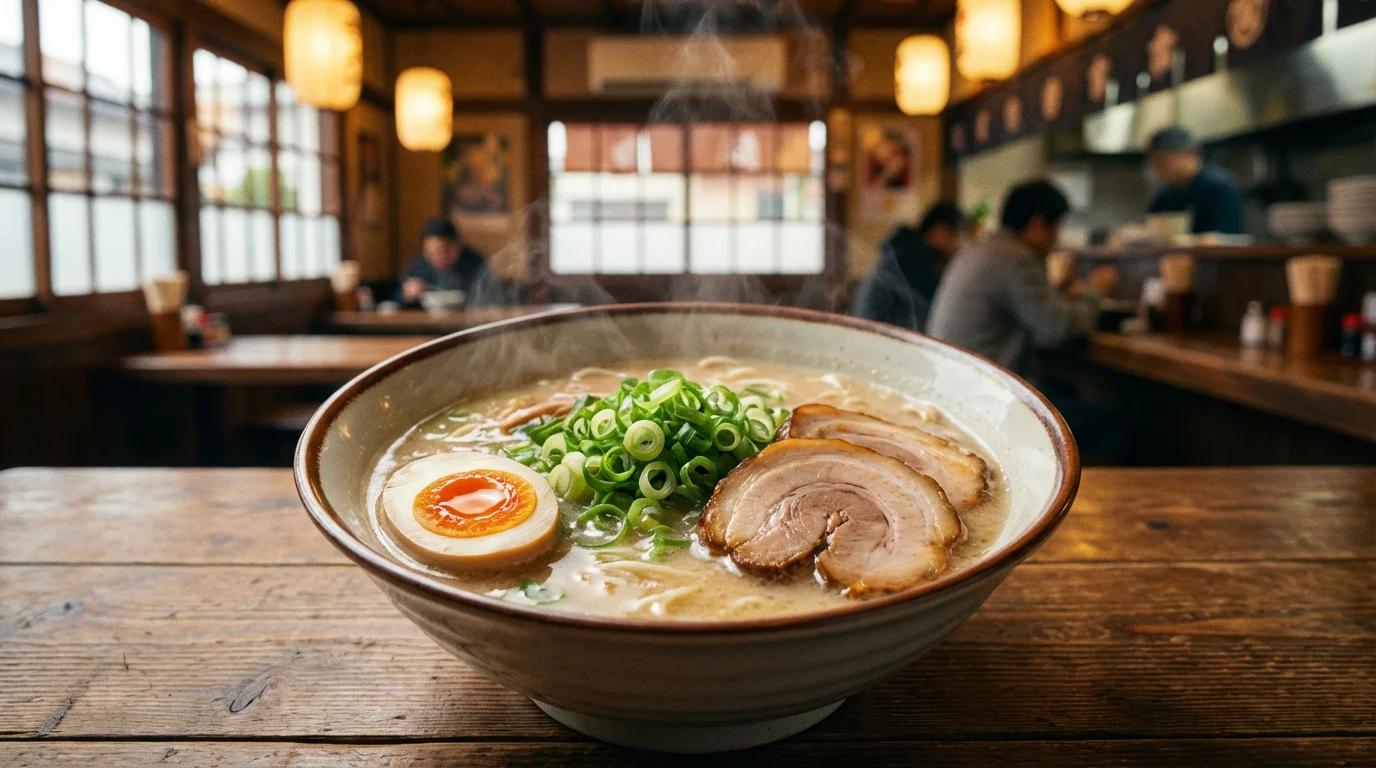
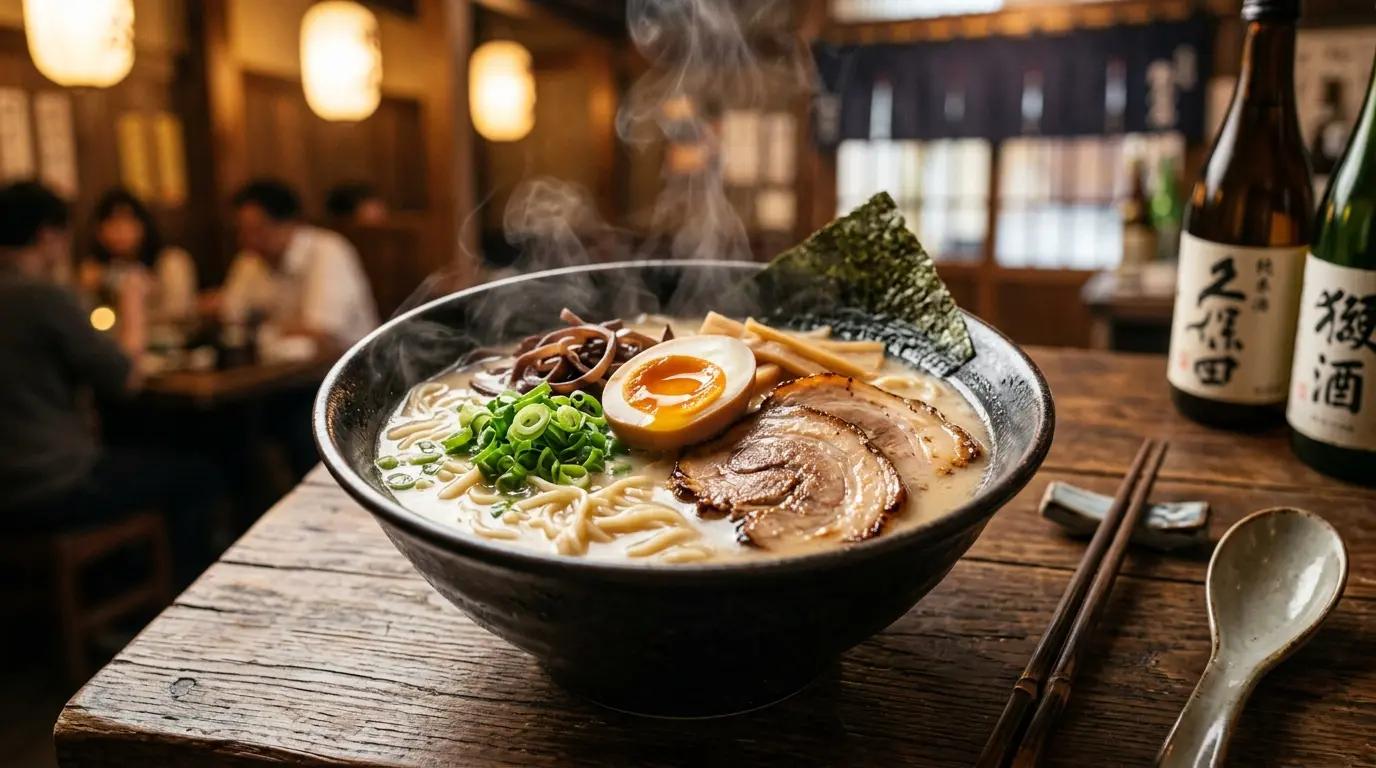
Prompt: Premium food photography style, a bowl of ramen with rich broth, soft-boiled egg, sliced pork, and green onions, placed on a wooden table in a Japanese restaurant setting, steam rising from the bowl, warm ambient lighting, close-up composition with shallow depth of field.
Analysis: Both models perform strongly, demonstrating high photorealism, rich texture detail, and accurate lighting. The food elements are well rendered in both outputs, with no visible artifacts, resulting in overall comparable performance.
Example 2: Human Portrait with Emotion
Now, we assess facial realism, expression accuracy, and skin detail, as well as how naturally the model renders human subjects under controlled lighting.


Prompt: Cinematic portrait photography style, a young woman in a white blazer standing in a modern office, natural window lighting casting soft shadows, subtle smile with confident expression, shallow depth of field, medium close-up composition.
Analysis: Both models perform strongly, demonstrating high photorealism, rich texture detail, and accurate lighting. The food elements are well rendered in both outputs, with no visible artifacts, resulting in overall comparable performance.
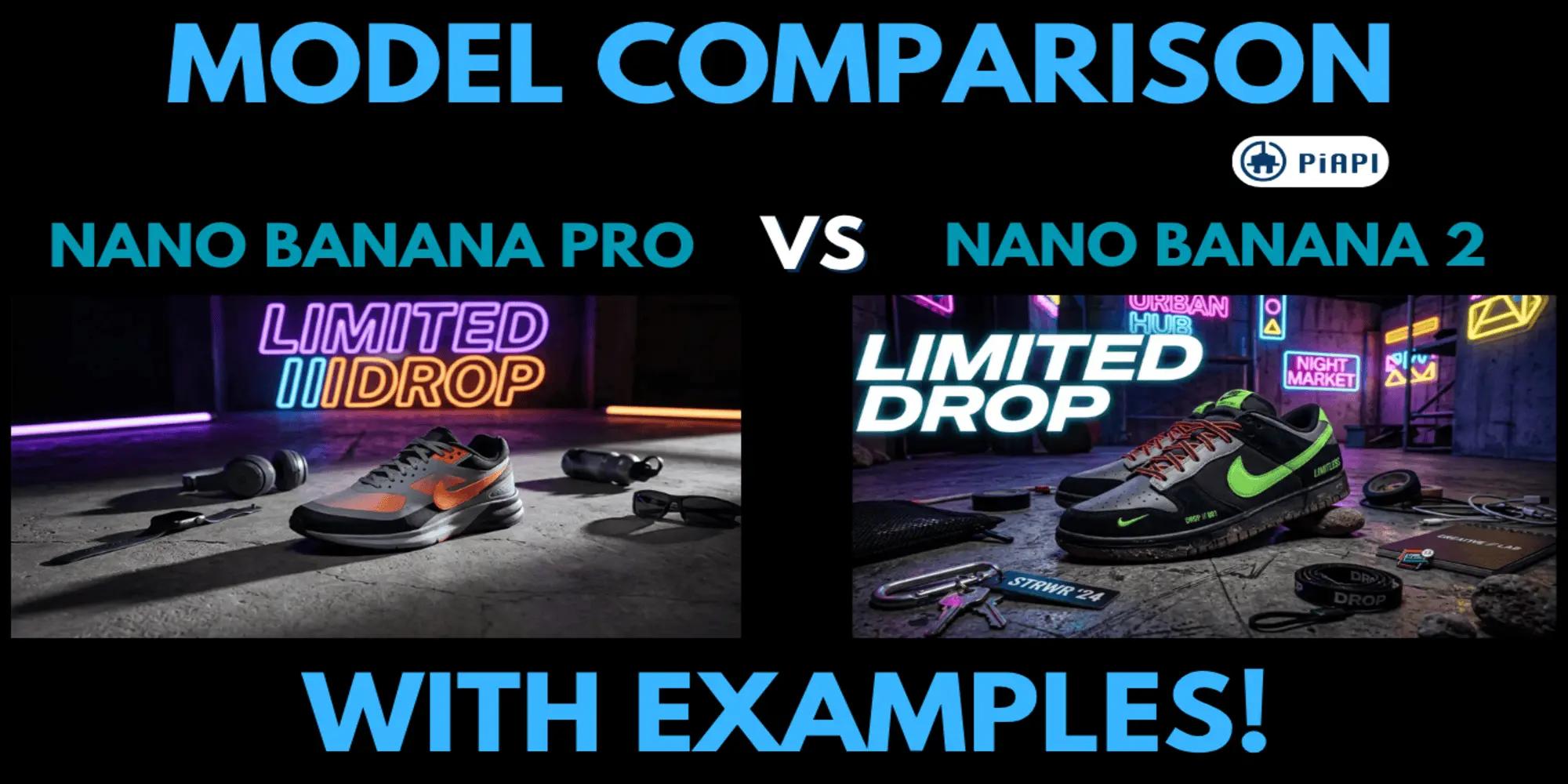
Example 3: Complex Multi-Object Scene with Text
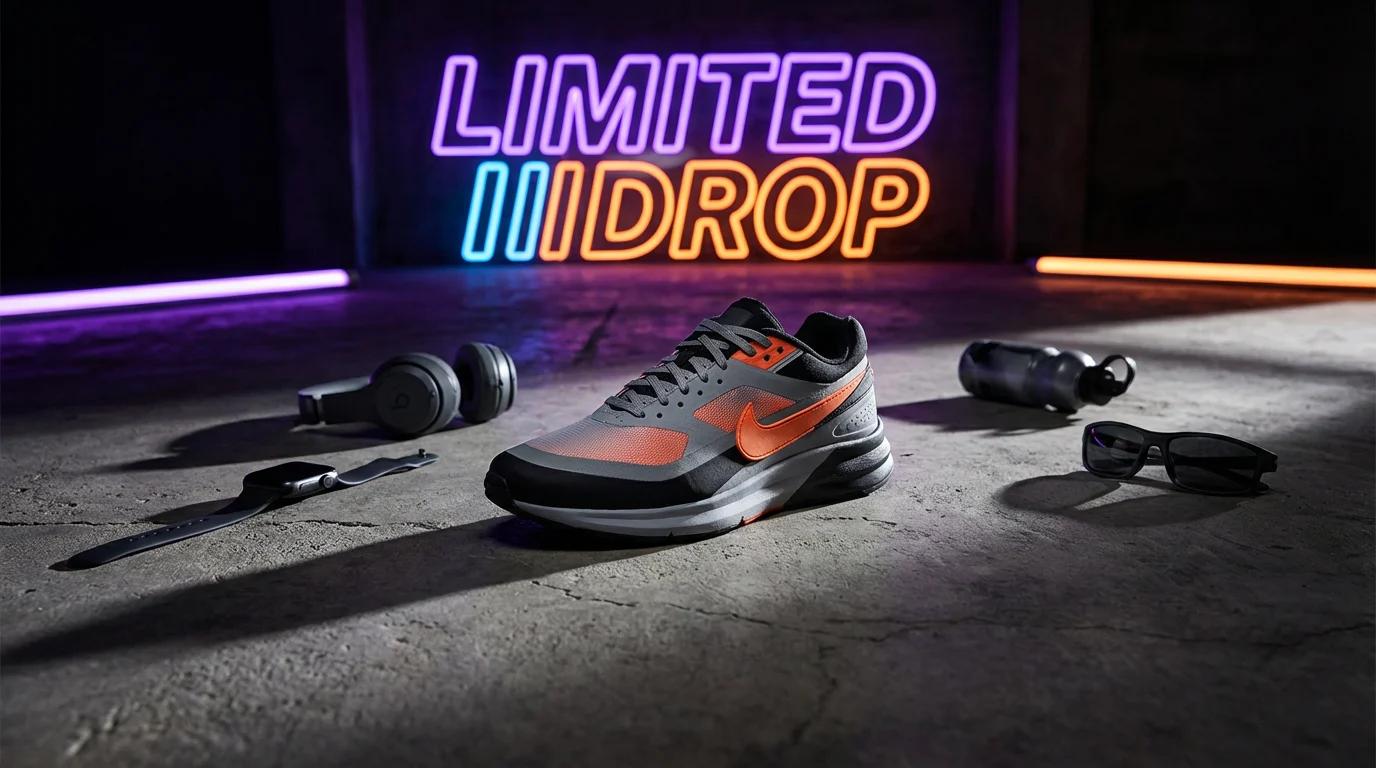
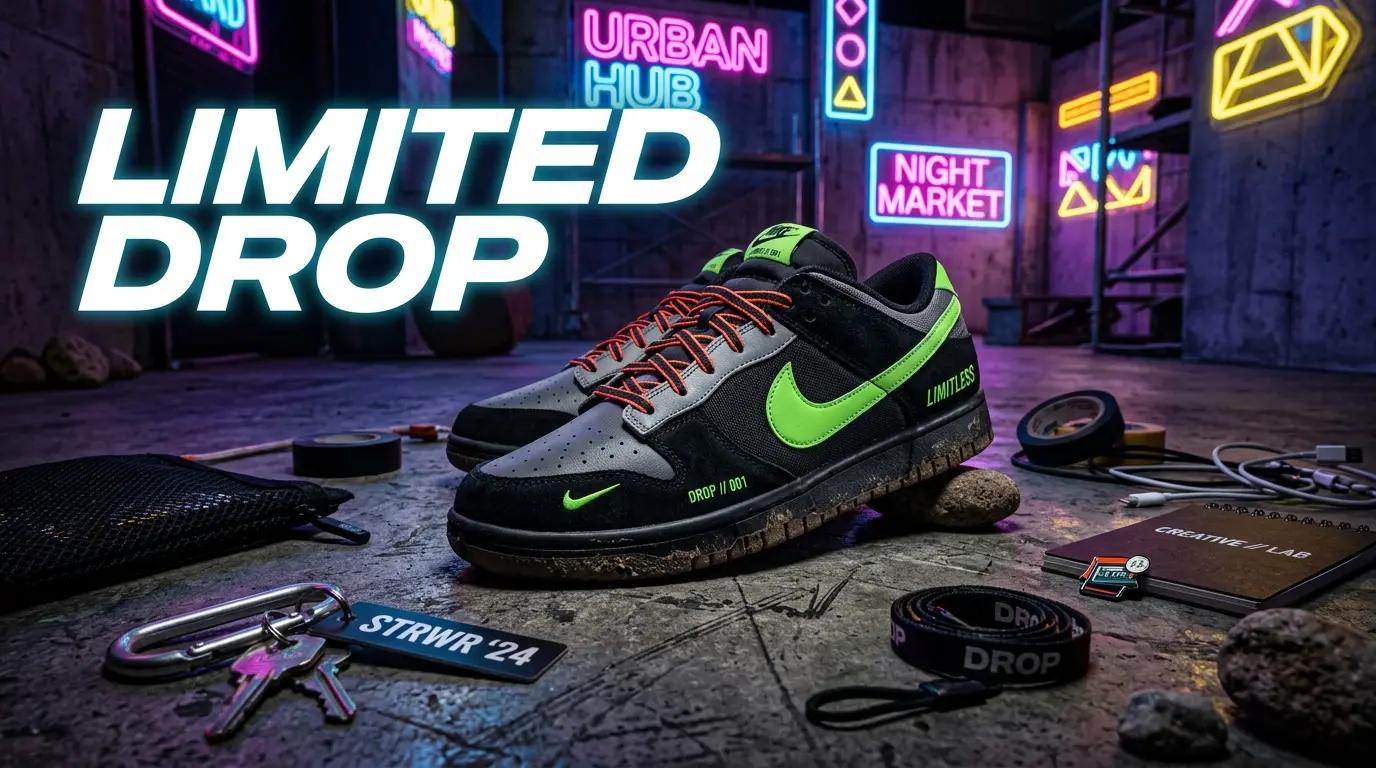
Prompt: Commercial advertising style, a modern sneaker placed on a concrete floor surrounded by scattered accessories, neon lighting in the background, bold text "LIMITED DROP" displayed clearly, dynamic angle composition with dramatic shadows.
Analysis: Both models follow the prompt reasonably well, but Nano Banana Pro shows slight errors in text rendering. In terms of overall visual quality, Nano Banana 2 appears more visually appealing, with a more natural distribution of scattered objects and stronger scene composition. No significant artifacts are observed in either output.
Final Thoughts: Nano Banana Pro vs Nano Banana 2
Across the extended set of examples, both Nano Banana 2 and Nano Banana Pro demonstrate strong baseline capabilities in prompt alignment, photorealism, and overall image quality. In simpler scenarios such as food and portrait generation, the two models often produce comparable results, with both delivering detailed outputs and minimal artifacts.
However, differences become more apparent in more complex tasks. Nano Banana Pro generally performs better in prompt interpretation and structured outputs, particularly in cases involving text rendering and controlled compositions. At the same time, Nano Banana 2 can produce more visually balanced and aesthetically pleasing results in certain scenes, especially where object distribution and composition play a larger role.
Nano Banana 2 remains a strong choice for efficient, high-volume workflows, while Nano Banana Pro provides improved precision and consistency for more demanding generation tasks.
Ultimately, the choice between Nano Banana Pro vs Nano Banana 2 depends on workflow priorities: whether the focus is on efficiency and visual balance, or on higher accuracy and stronger prompt adherence.
Start testing both models and get your Nano Banana API Key and Nano Banana Pro API Key Key via PiAPI today!
Unlock the power of 20+ AI models with PiAPI — image, video, chat, music, and more. Sign up today and start building smarter, faster and at scale.