
Why Your AI Face Rating Changes: Photo Tips for More Consistent Face Scores
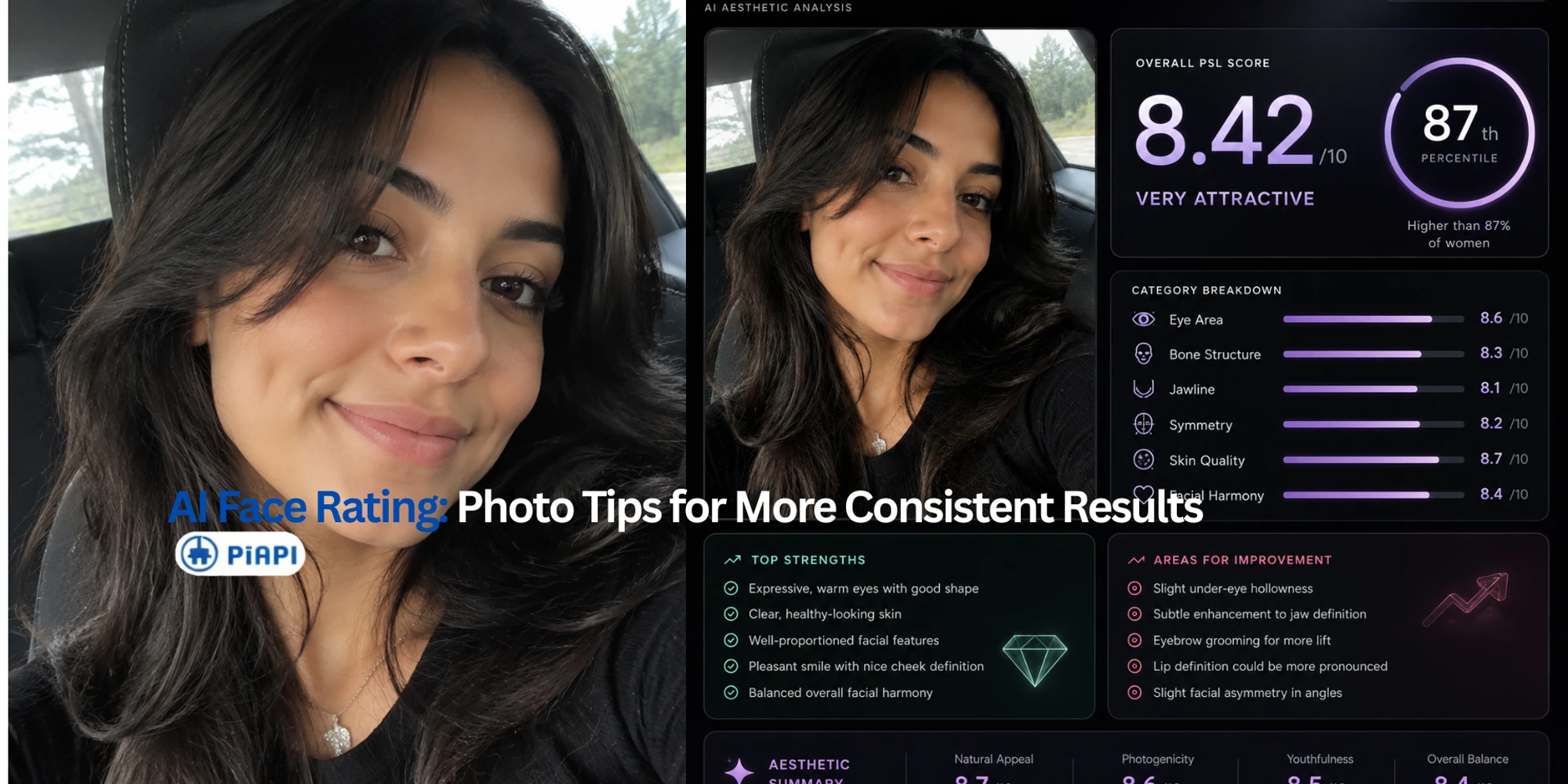
AI face rating changes can feel confusing. You upload one selfie, get a face score, upload another photo later, and the result changes. That does not mean the AI found a fixed "true" score for you and then changed its mind. Most of the time, the score changes because lighting, camera angle, expression, blur, filters, or face visibility gave the AI different visual information.
Quick answer: AI face ratings can change because the AI is analyzing the uploaded image, not a fixed personal identity score. Lighting, camera angle, expression, blur, filters, face coverage, and image clarity can all affect the report. For more consistent face scores, upload clear, front-facing selfies under similar lighting and compare reports from similar photo conditions.
This guide explains why AI face rating scores change, what AI face rating accuracy can and cannot tell you, and how to choose a better selfie for a more consistent face rating. If you want the broader background on score language, see our guide to what AI face rating and PSL scores mean. If you are ready to test a clearer selfie, you can use PiAPI's AI Face Rater.
AI Face Rating Is Image-Dependent, Not a Fixed Identity Score
An AI face rating tool can only analyze what is visible in the uploaded image. It does not see your face in every possible lighting condition, from every angle, or across every expression. It receives one photo and generates a report from that specific input.
That is why two photos of the same person can produce different face scores or different category notes. One image may show the full face clearly. Another may be dim, tilted, filtered, cropped, or partially covered. The AI is not comparing your entire identity across all real-world contexts. It is reacting to one image at a time.
The healthiest way to read an AI face score is as photo and appearance feedback. It can be useful for noticing image clarity, expression, face visibility, and profile-photo presentation. It should not be treated as a measure of personal worth, health, identity, personality, or objective attractiveness.
Lighting: Why Dark or Uneven Light Changes Face Scores
Lighting is one of the easiest reasons an AI face rating can change. A clear selfie with soft, even light gives the AI more visible detail to work with. A dark selfie, harsh side light, or strong backlight can hide parts of the face and change how the report reads visible features.
Low light can blur edges around the eyes, jawline, cheekbones, and face contour. Harsh lighting can create shadows that make one side of the face look heavier or less balanced. Backlighting can make the face less readable because the camera exposes for the background instead of the face.
For a more consistent AI face rating, use light that is:
- Soft and even
- In front of you, not behind you
- Bright enough to show facial features clearly
- Similar between photos if you want to compare reports
Camera Angle: Why Low, Tilted, or Close-Up Selfies Affect Ratings
Camera angle can also change an AI face score. A selfie taken at eye level usually gives the AI a more straightforward view of facial balance, proportions, and symmetry. A low-angle selfie, high-angle selfie, tilted selfie, or very close selfie can distort the way features appear.
A low angle can emphasize the lower face and jawline. A high angle can make the forehead and eyes appear larger relative to the lower face. A tilted photo can make left-right balance harder to read. A very close selfie can stretch the center of the face and change perceived spacing between features.
If you are comparing two face rating reports, the angle matters. A front-facing eye-level selfie and a low-angle selfie are not equivalent inputs. The changed report may reflect the changed camera position, not a stable difference in the person.
Example: Why the Same Person Can Get Different Face Scores
These two selfies show the same person, but the input conditions are different. The second photo changes lighting and camera angle, so the AI has different visual information to analyze. That can change the report even when the person is the same.
In this example, the two reports stay in the same broad rating band, but the score shifts slightly from \